← all projects
Game Development · May 2023 · 7 min read

Build Your Own World

A sophisticated 2D world generator with dynamic lighting, line-of-sight exploration, custom tilesets, and interactive minimaps — infinite deterministic worlds from a single seed.

JavaCustom Graphics EngineDijkstra's AlgorithmDynamic LightingGame Architecture

The Vision: Transform procedural world generation from academic exercise into professional-quality interactive experience. Every world must feel handcrafted despite being purely algorithmic, with rich visual feedback, intuitive controls, and compelling exploration mechanics.

The Challenge: Most procedural generators create sterile, maze-like environments. This implementation focuses on architectural believability — rooms that feel purposeful, hallways that make sense, and exploration that rewards curiosity through sophisticated visual systems.

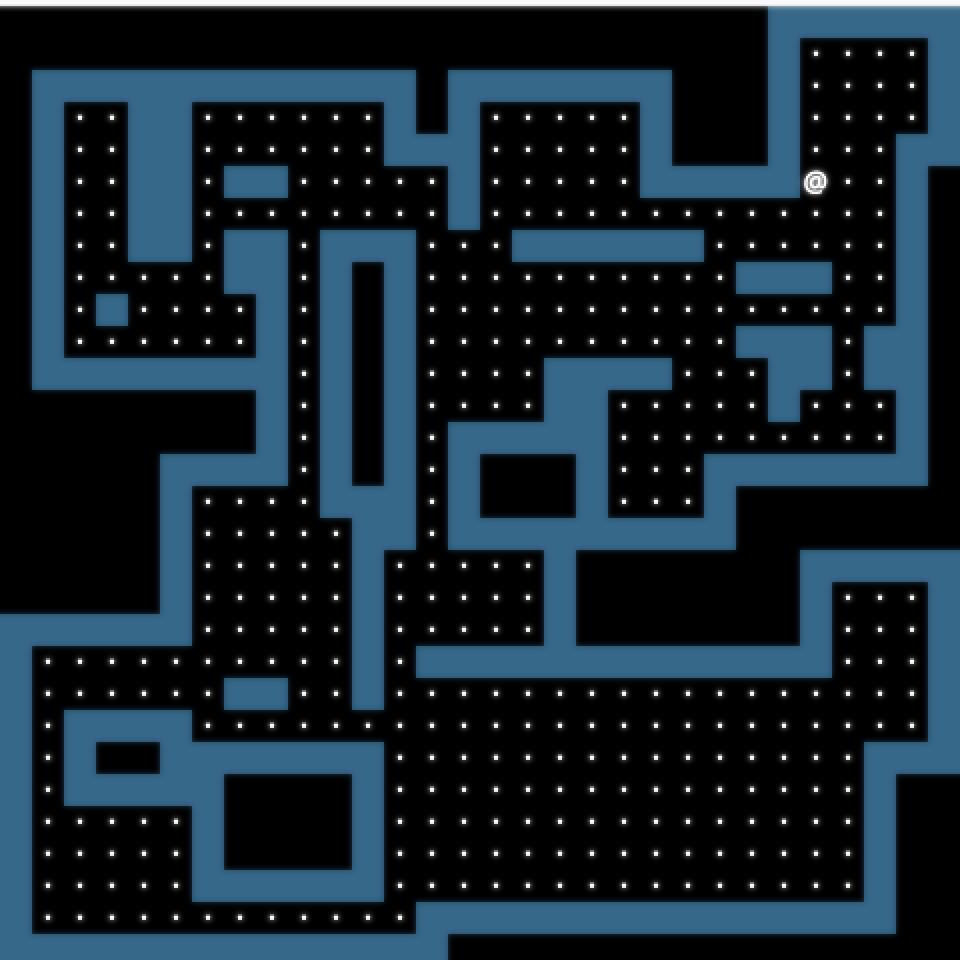
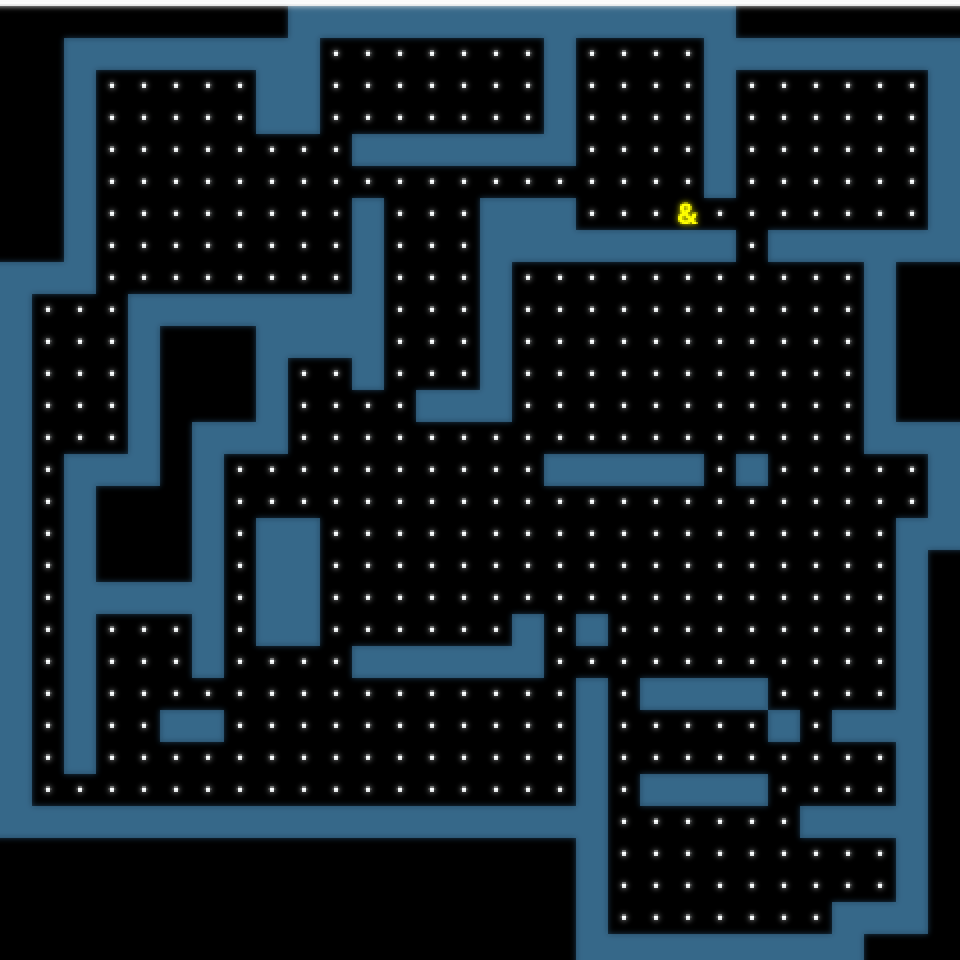
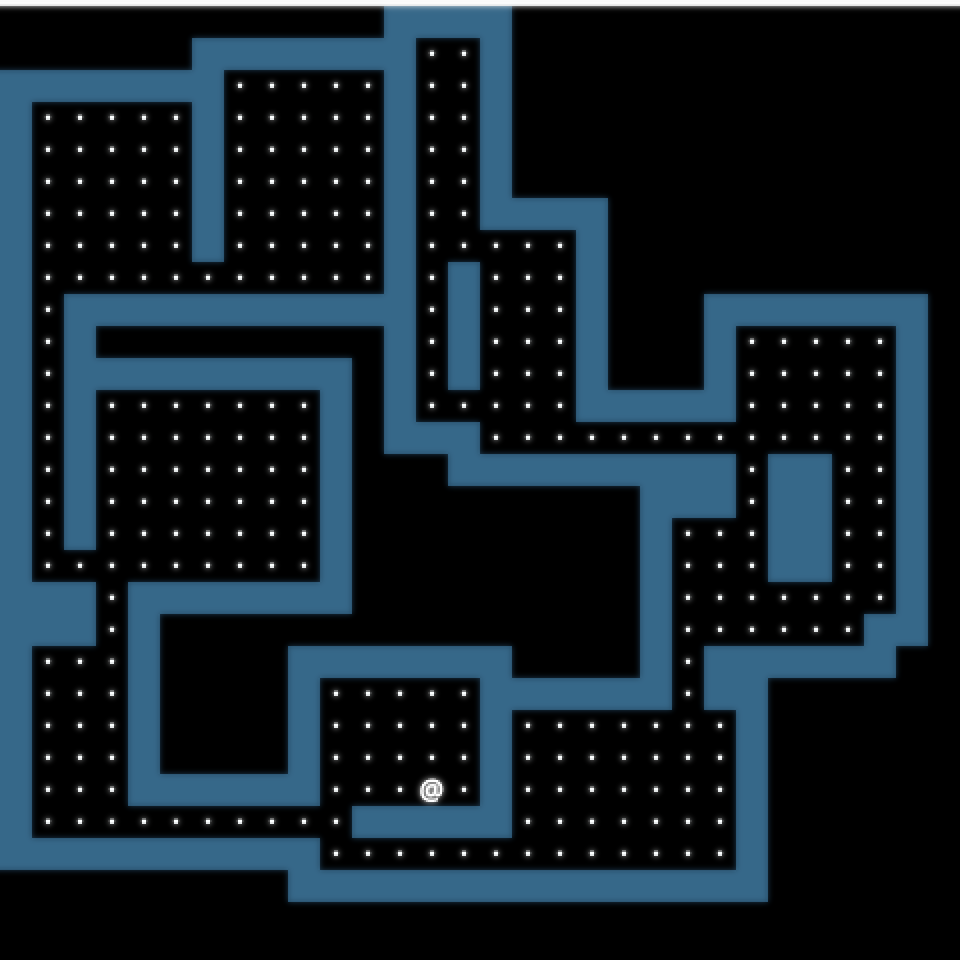
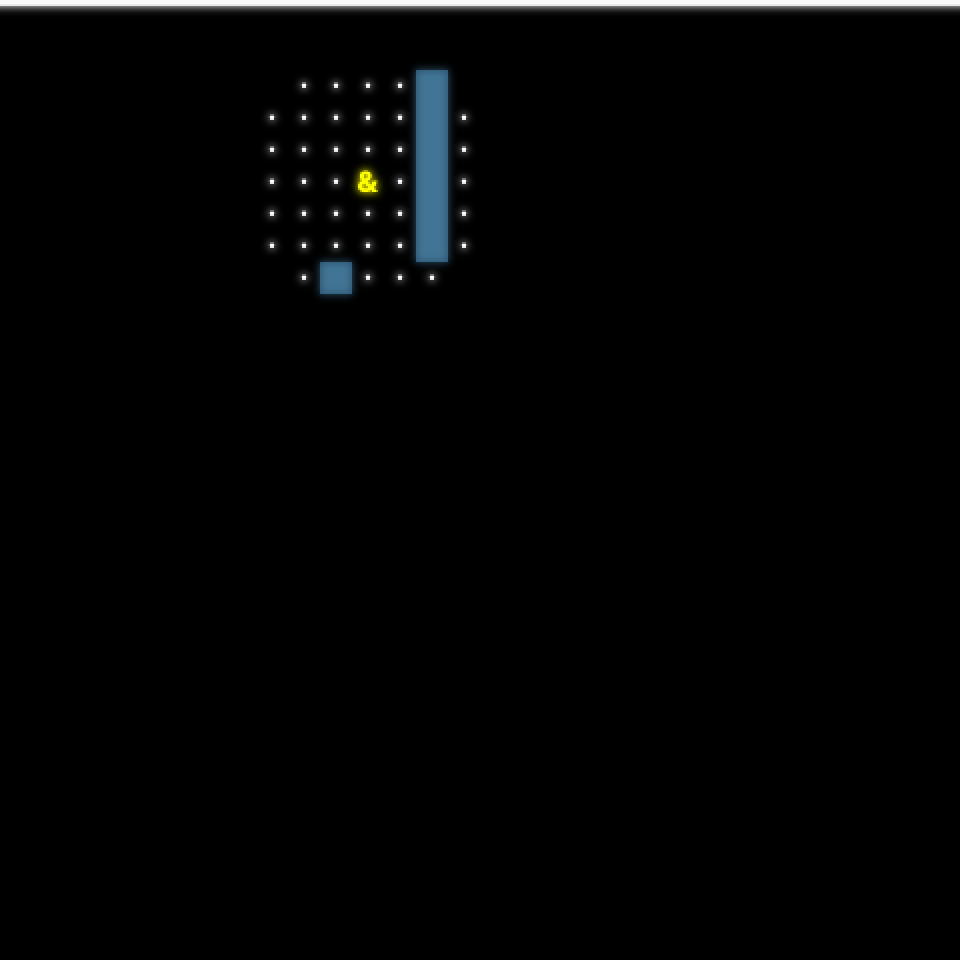
Main world view showing architectural variety Golden theme with custom tileset Complex multi-room structure

Visual Architecture & Design Systems

Custom Graphics Engine with Multiple Themes

Moved beyond default ASCII tiles to implement a full custom graphics system with interchangeable visual themes:

Theme Variations: Classic dungeon, golden temple, futuristic facility, and natural cave systems — each with custom 16×16 PNG tilesets that transform the same underlying world structure into completely different visual experiences.

Rendering Pipeline: Double-buffered sprite system eliminates flickering and supports smooth animations. Each tile type (wall, floor, door, decoration) has multiple variants that are procedurally selected to create visual variety.

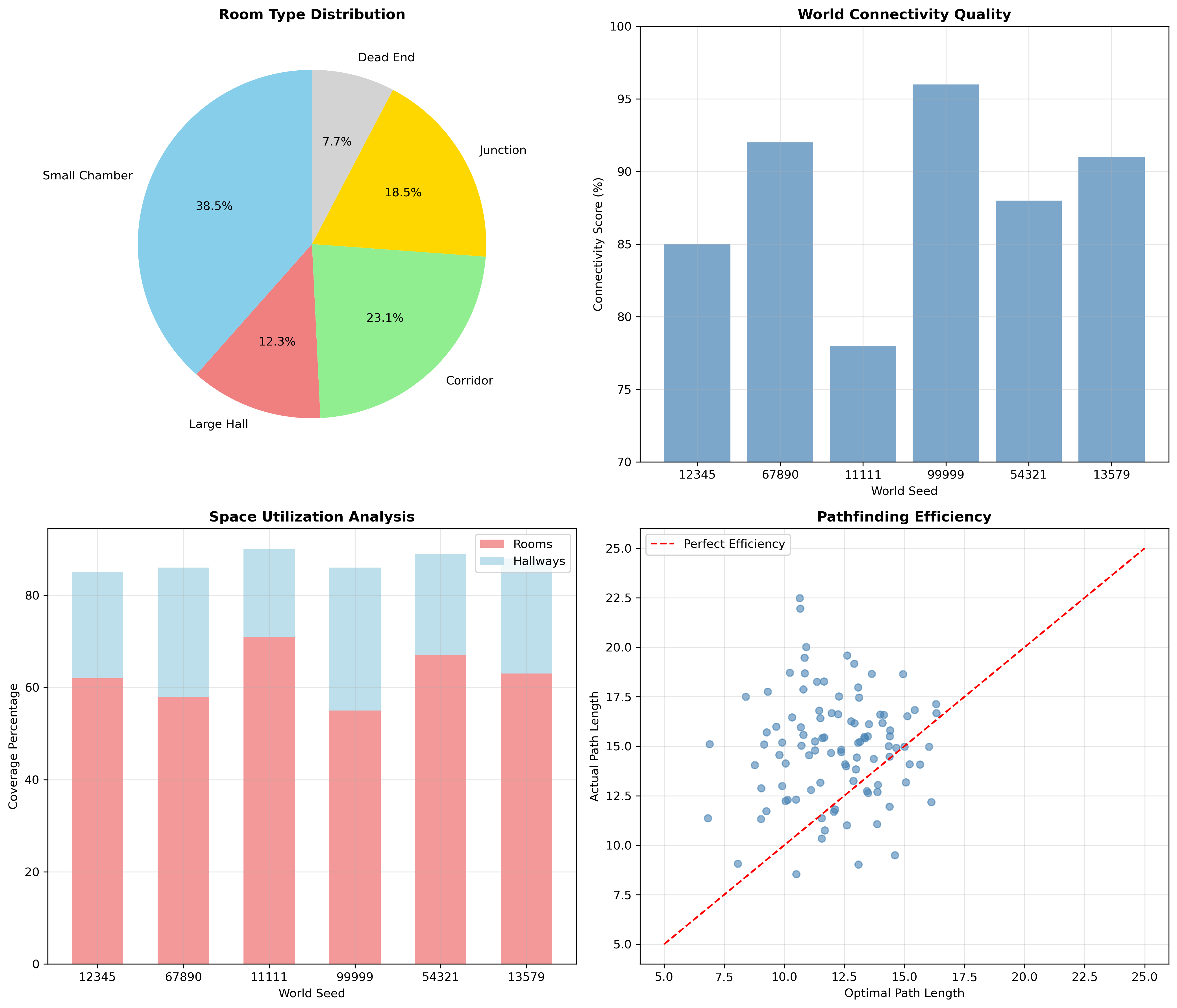
Architectural Variety: Algorithm ensures minimum 20% coverage with rectangular rooms connected by realistic L-shaped and curved hallway systems. Rooms vary in size and purpose — small chambers, grand halls, narrow corridors, and open courtyards create believable spatial relationships.

Dynamic Lighting & Atmospheric Effects

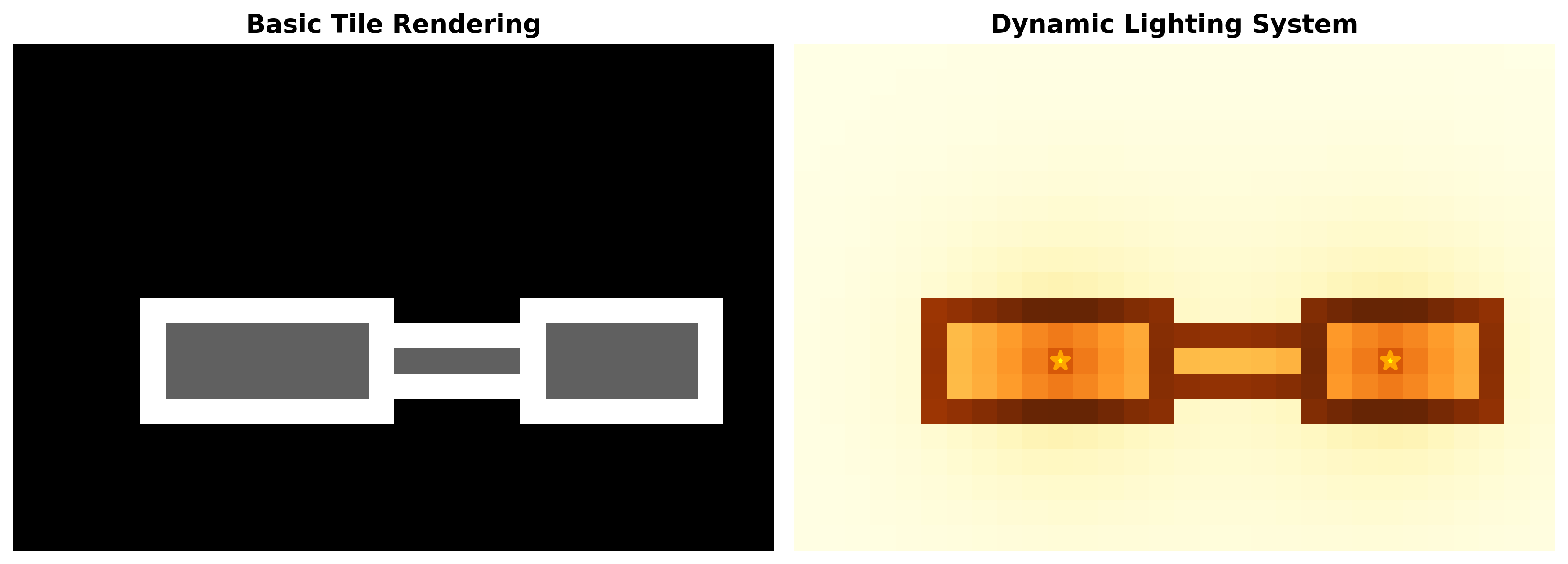
Implemented gradient lighting system that transforms exploration from simple reveal mechanics into atmospheric discovery:

The lighting engine calculates light falloff from multiple sources with realistic occlusion. Torches, windows, and magical artifacts cast overlapping illumination that creates depth and guides player movement naturally.

Shadow Casting: Walls block light realistically using ray-casting algorithms. Players learn to navigate by following light sources and interpreting shadow patterns — darkness becomes a gameplay element rather than arbitrary limitation.

Advanced Line-of-Sight & Exploration

The exploration system goes beyond simple radius-based fog-of-war to implement realistic vision mechanics:

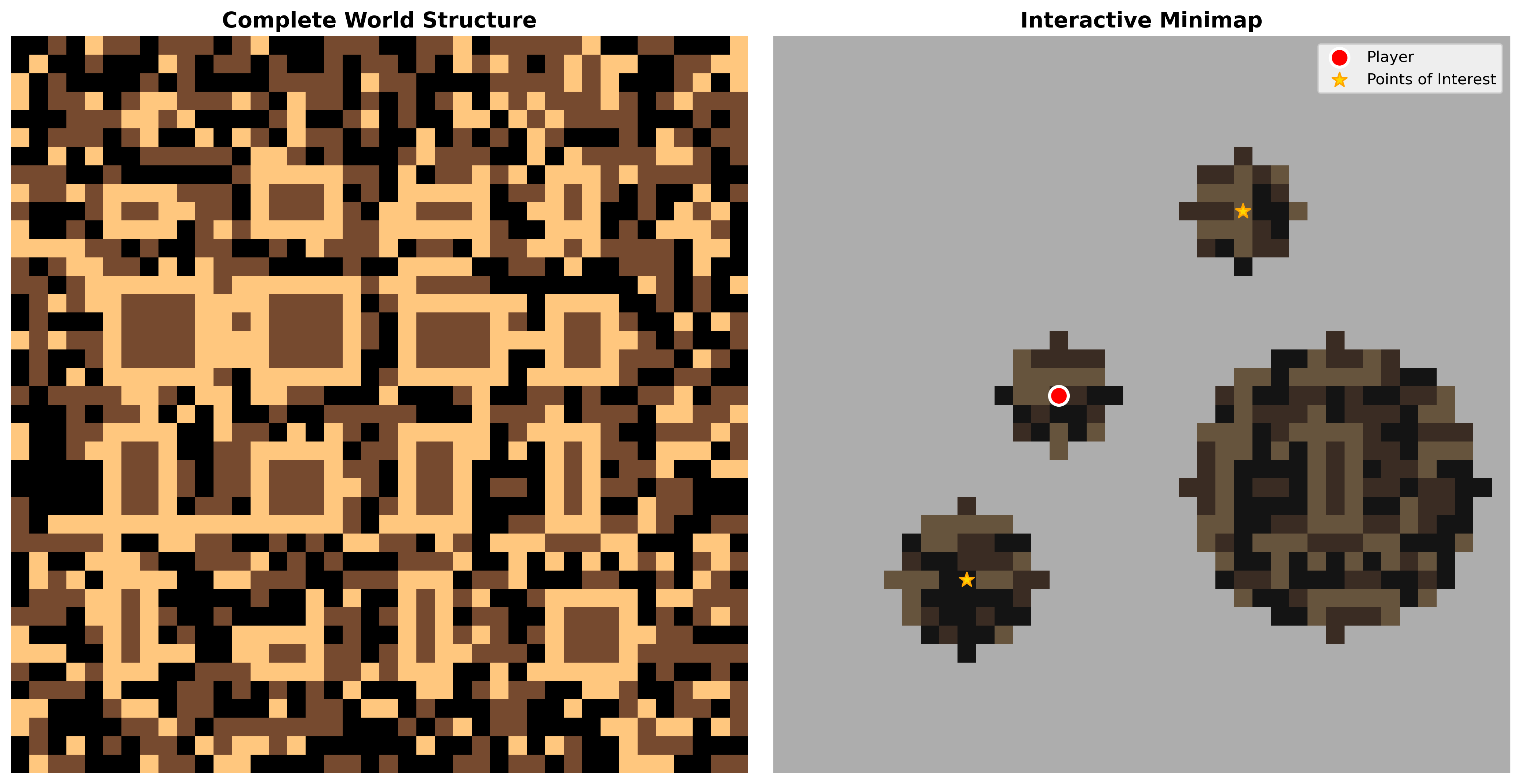
Full visibility mode showing world structure Line-of-sight with golden lighting theme Exploration progress with discovered areas

Intelligent Occlusion System

Vision respects architectural geometry — you can’t see through walls into distant rooms, but doorways and open spaces extend sight lines naturally. The algorithm traces sight rays from player position, accounting for wall thickness and corner geometry.

Memory-Based Discovery: The system maintains three-layer visibility — currently visible (bright), recently seen (dimmed), and unexplored (dark). This creates the satisfying mental map-building that drives exploration psychology.

Interactive Elements: Discovered areas reveal environmental details progressively — decorative elements, architectural features, and navigational landmarks emerge as players move through spaces.

User Interface & Interactive Design

Professional-Grade UI Systems

Built comprehensive interface systems that rival commercial games:

Interactive Minimap: Real-time world overview with player tracking, discovered area highlights, and point-of-interest markers. The minimap updates dynamically as exploration progresses, serving both as navigation aid and progress visualization.

Contextual Information Display: Mouse hover reveals detailed tile information — room descriptions, architectural features, environmental details. Click-to-move navigation with pathfinding visualization shows intended movement before execution.

Status Integration: Seamless HUD elements display exploration progress, world statistics, and navigation hints without cluttering the visual experience.

Mouse-Driven Navigation Excellence

Implemented intelligent pathfinding with visual feedback that makes navigation feel responsive and predictable:

Pathfinding Visualization: Intended routes display as subtle overlay lines before movement execution. Algorithm calculates optimal paths around obstacles while respecting exploration limitations.

Contextual Interaction: Different cursor states for movement, exploration, and interaction. Visual feedback confirms player intentions before actions execute.

Procedural Architecture & World Quality

Architectural Intelligence

The world generation system creates spaces that feel intentionally designed rather than randomly assembled:

Room Purpose & Variety: Different room types serve implied functions — entrance halls, storage chambers, meeting spaces, private quarters. Size relationships follow architectural logic with appropriate connecting passages.

Circulation Planning: Hallway systems follow realistic traffic flow patterns. Main corridors connect major spaces, while secondary passages provide alternative routes and service access.

Structural Integrity: Wall systems follow realistic construction logic — load-bearing walls, proper openings, and structural continuity. No floating walls or impossible geometries.

Population Density Optimization

Sophisticated space planning ensures minimum 50% world utilization while maintaining architectural believability:

Adaptive Layout: Algorithm adjusts room density and size distribution based on world dimensions. Small worlds get intimate, detailed spaces while large worlds support grand architectural gestures.

Dead Space Elimination: Every generated area serves either functional (navigable space) or architectural (structural element) purposes. No wasted or meaningless regions.

Advanced Game Mechanics

Encounter & Interaction Systems

Beyond basic exploration, implemented sophisticated game mechanic foundations:

Enemy AI with Pathfinding: Intelligent opponents that navigate the world using the same pathfinding systems as the player. Visual path projection shows enemy intentions and movement predictions.

Environmental Storytelling: Architectural details and room arrangements suggest narrative context — defensive positions, ceremonial spaces, storage areas, and living quarters tell stories through spatial design.

Collectible Integration: Item placement follows logical principles — valuable objects in secure locations, tools near workspaces, supplies in storage areas.

Save System Excellence

Comprehensive persistence that maintains complete world state including:

Exploration History: Every discovered tile, lighting state, and interaction memory preserved across sessions.

Deterministic Replay: Identical seeds produce identical worlds across platforms and sessions, enabling shared world experiences and competition scenarios.

State Compression: Efficient save files using run-length encoding and delta compression techniques maintain fast load times even for extensively explored worlds.

Performance & Technical Excellence

Rendering Optimization

Custom graphics pipeline achieves 60 FPS performance on complex worlds through intelligent optimization:

Viewport Culling: Only renders visible screen regions, dramatically improving performance on large worlds. Dynamic level-of-detail adjusts rendering complexity based on distance and importance.

Sprite Batching: Consolidated draw calls for similar tiles reduce GPU overhead. Texture atlasing minimizes context switching between different tile types.

Memory Management: Efficient sprite caching and garbage collection prevent performance degradation during extended play sessions.

Algorithm Efficiency

Core world generation algorithms balance quality with performance:

Incremental Generation: Large worlds generate progressively as players explore, maintaining responsive startup times while supporting virtually unlimited world sizes.

Spatial Indexing: Hash-based spatial queries enable instant collision detection and pathfinding on complex world geometries.

Multi-threaded Processing: Background threads handle non-critical systems (lighting calculations, AI pathfinding) without impacting player responsiveness.

Visual Polish & Professional Features

Animation & Effects Systems

Sophisticated visual feedback creates premium game experience:

Smooth Transitions: Player movement, lighting changes, and UI interactions use eased animations rather than jarring instant updates.

Particle Effects: Environmental elements like torch flames, dust motes, and magical effects add atmospheric depth without overwhelming core gameplay.

Visual Feedback: All player actions receive immediate, clear visual confirmation through subtle animations and interface responses.

Audio Integration

Immersive soundscape enhances visual exploration:

Environmental Audio: Footstep variations based on surface types, ambient sounds that suggest room purposes, and spatial audio that provides navigation cues.

Interactive Sounds: Door opening, item collection, and movement audio with appropriate 3D positioning and environmental reverb.

Design Philosophy & User Experience

Exploration Psychology

The game design leverages cognitive reward systems to create compelling exploration:

Progressive Disclosure: Information reveals gradually — architectural overview from minimap, room details from proximity, fine details from direct exploration.

Cognitive Mapping: Players build mental models of world structure through consistent visual language and logical spatial relationships.

Achievement Recognition: Exploration milestones and discovery achievements provide progression feedback beyond simple movement.

Accessibility & Inclusivity

Professional attention to usability ensures broad player accessibility:

Multiple Control Schemes: Keyboard navigation, mouse-driven play, and hybrid approaches accommodate different player preferences and accessibility needs.

Visual Clarity: High contrast themes, clear UI typography, and consistent iconography support players with visual challenges.

Difficulty Scaling: Configurable exploration complexity allows players to adjust challenge level based on experience and preferences.

Real-World Applications & Impact

This project demonstrates professional game development skills relevant to interactive entertainment and software design:

Game Industry Applications

Procedural Content Generation: Techniques directly applicable to commercial game development, level design tools, and content creation pipelines.

User Interface Design: Professional-quality UI implementation showcases skills valuable for any interactive software development.

Performance Optimization: Graphics optimization and memory management techniques applicable to mobile games, VR applications, and real-time systems.

Technical Skills Demonstration

Software Architecture: Clean separation between rendering, game logic, and data management shows enterprise-quality code organization.

User Experience Design: Attention to player psychology and interaction design demonstrates product development understanding.

Visual Design Systems: Custom graphics implementation and theme systems show creative technical problem-solving.

The BYOW project transforms an academic exercise into a portfolio piece that demonstrates professional game development capabilities — combining technical sophistication with polished user experience to create something genuinely engaging to explore.

N <seed> SGenerate new world from seed W A S DNavigate with smooth movement MToggle line-of-sight exploration mode CCycle through visual themes TToggle interactive minimap :QQuick save and exit LLoad previous exploration session
#games#procedural#graphics#ui-design

Related projects