Colorizing 1907 Russian Empire Photographs
Reconstructing color from Sergei Prokudin-Gorskii's glass plate negatives (captured 1907–1915) using image pyramids and normalized cross-correlation alignment.
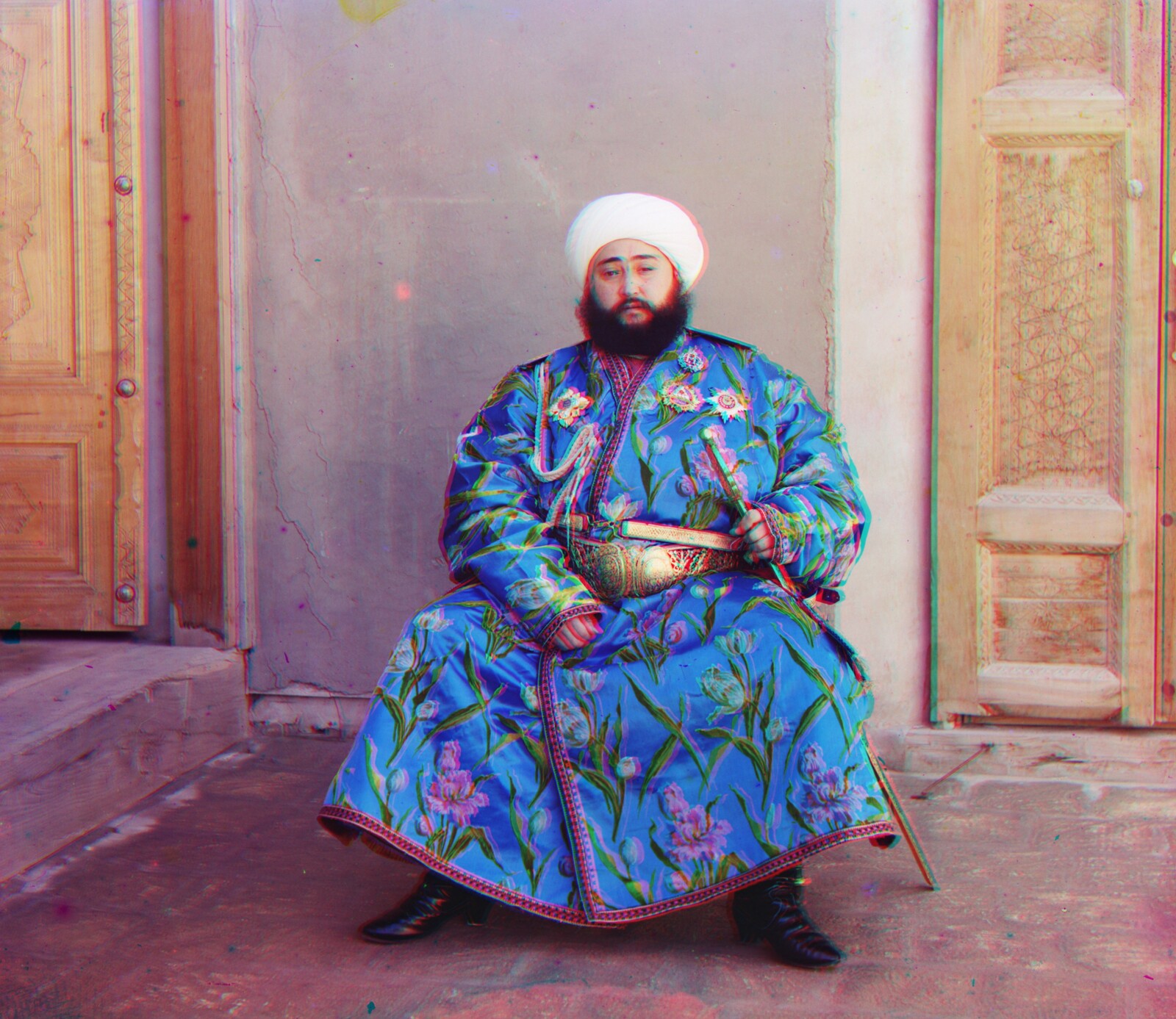
Before color film existed, Sergei Prokudin-Gorskii traveled across the Russian Empire with a camera that exposed three grayscale plates through red, green, and blue filters. A century later, the plates survive, but the three exposures are slightly offset, and naive stacking produces ghosted, rainbow-fringed chaos.
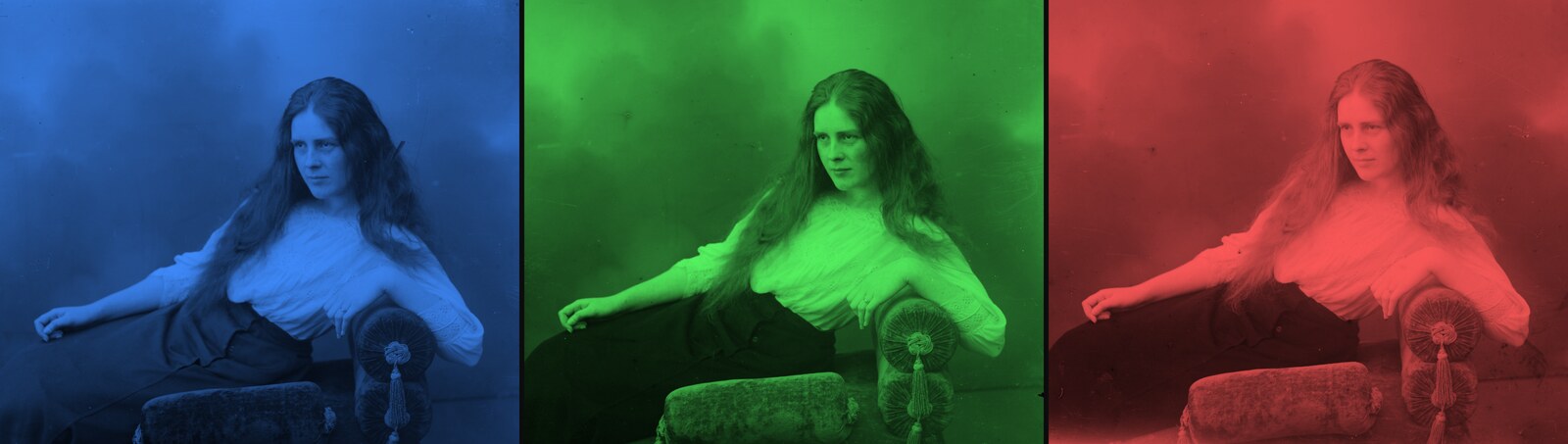
Three glass plates per photograph: blue, green, and red filtered exposures of the same subject, captured seconds apart. The job: find the (dx, dy) shift that aligns each pair to the blue reference, then stack them into one full-color image.
The Alignment Problem
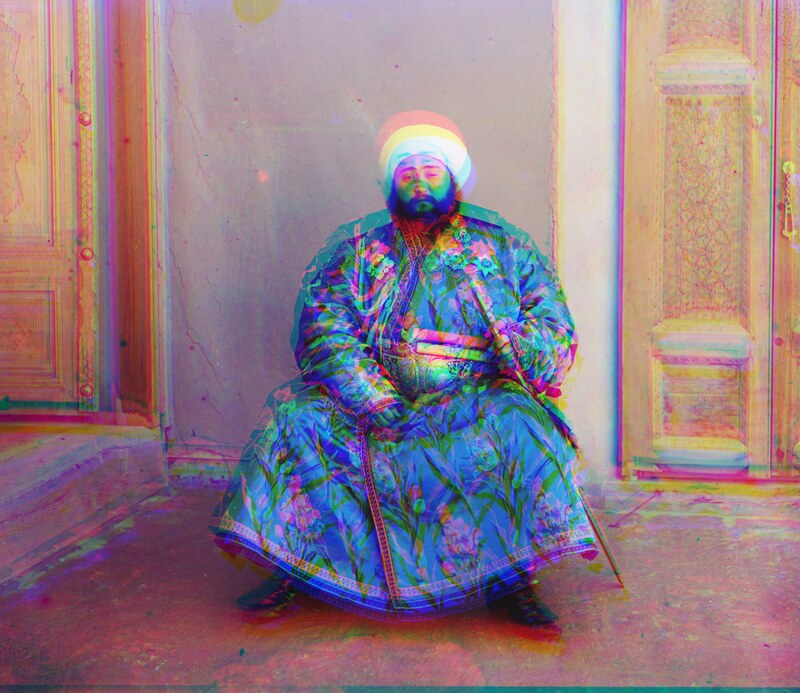
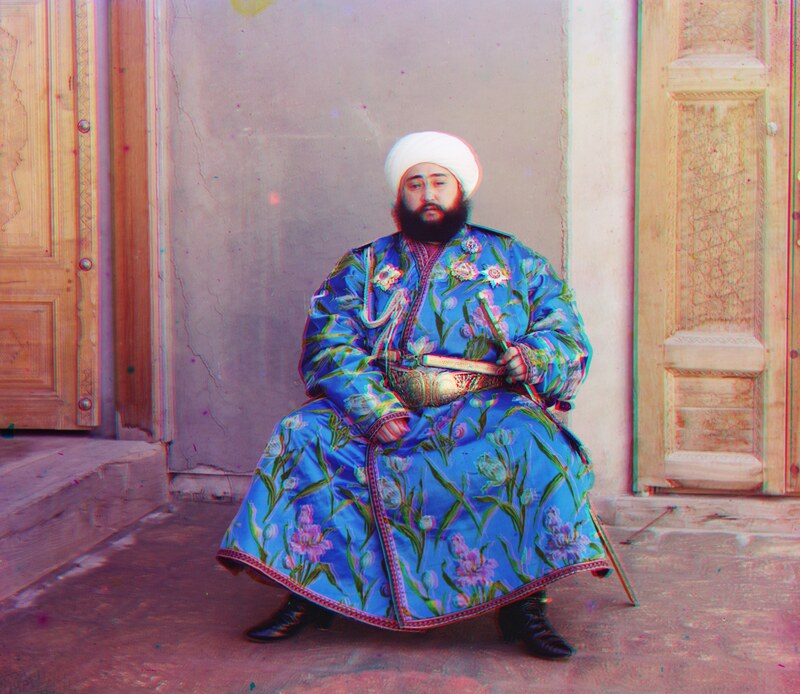
Left: naive stack without alignment. The red channel sits 125 pixels down and 17 pixels right of the blue, making every edge a rainbow fringe. Right: after pyramid-search alignment. The shift is too large for brute-force search at full resolution to be fast, and too large for a small search window to find at all.
Normalized Cross-Correlation
The score function for a candidate shift is normalized cross-correlation between the shifted channel and the blue reference:
where and are the zero-mean normalized versions of the target and reference images. NCC is preferred over sum-of-squared differences (SSD) because the blue, green, and red filters have different transmission spectra; the same scene surface can be significantly brighter in one channel than another. NCC is invariant to these per-channel brightness offsets; SSD is not.
The search exhausts all within a ±15 pixel window at the coarsest pyramid level and takes the argmax.
Image Pyramid for Large Offsets
Small plates (JPEG inputs) have offsets of a few pixels, so brute force over ±15 is fast. Large plates (TIFF inputs, 3000+ pixels tall) have offsets of 50–140 pixels. Searching a ±150 pixel window at full resolution is O(300² × N²) per channel, which is too slow.
The pyramid downsamples by 2× repeatedly until the image is under ~200px on the longest side (typically 4–5 levels for the large TIFFs). At the coarsest level, a ±15 window search finds the rough alignment. Each finer level refines with a ±2 window centered on the propagated estimate:
This reduces the search from O(offset²) to O(levels × window²), making large-plate alignment fast.
Emir Failure and the Fix
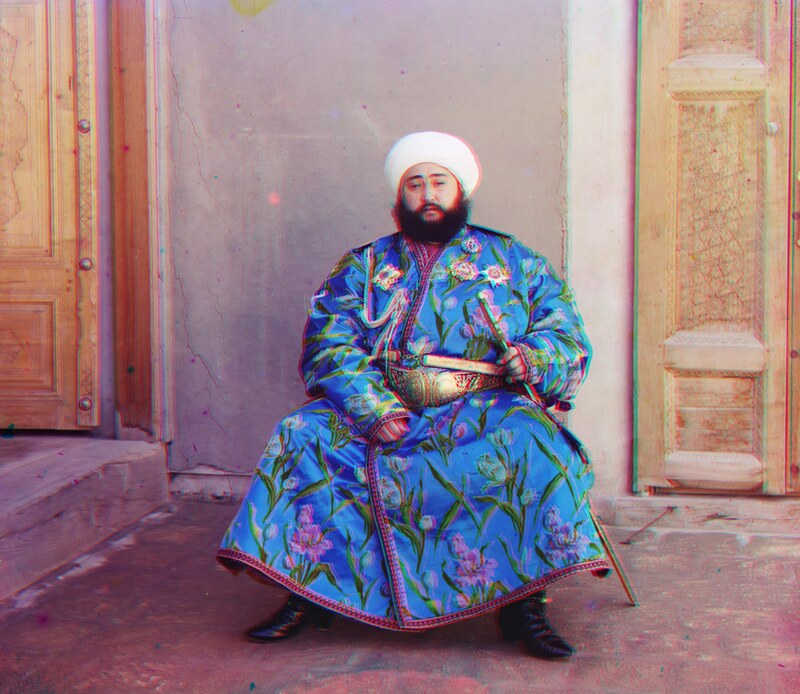
The Emir of Bukhara’s robe is dyed with a pigment that reflects red light very differently from green or blue: the robe appears nearly white in the red channel and nearly black in the blue. Raw intensity NCC finds a false optimum: it aligns the robe to itself across channels, which is geometrically wrong.
The fix: replace raw intensities with Sobel edge magnitudes before computing NCC. Edges are driven by geometry (fabric folds, embroidery borders), not filter-specific absorption. Gradient-based alignment gives the correct offset for the Emir (green: (9, 49), red: (17, 125)) whereas intensity-based NCC finds the wrong shift.
Alignment Results
| Image | Green (dy, dx) | Red (dy, dx) |
|---|---|---|
| cathedral | (−1, 1) | (−1, 7) |
| church | (−2, 77) | (−15, 41) |
| emir | (9, 49) | (17, 125) |
| harvesters | (−6, 77) | (2, 133) |
| lady | (−10, 61) | (−19, 95) |
| self portrait | (−2, 141) | (−7, 93) |
| three generations | (0, 47) | (−1, 106) |
| train | (−9, 89) | N/A |
Large-plate images (emir, harvesters, self portrait) have red-channel offsets over 90 pixels, well outside any single-scale search window and only findable via pyramid.
The Collection
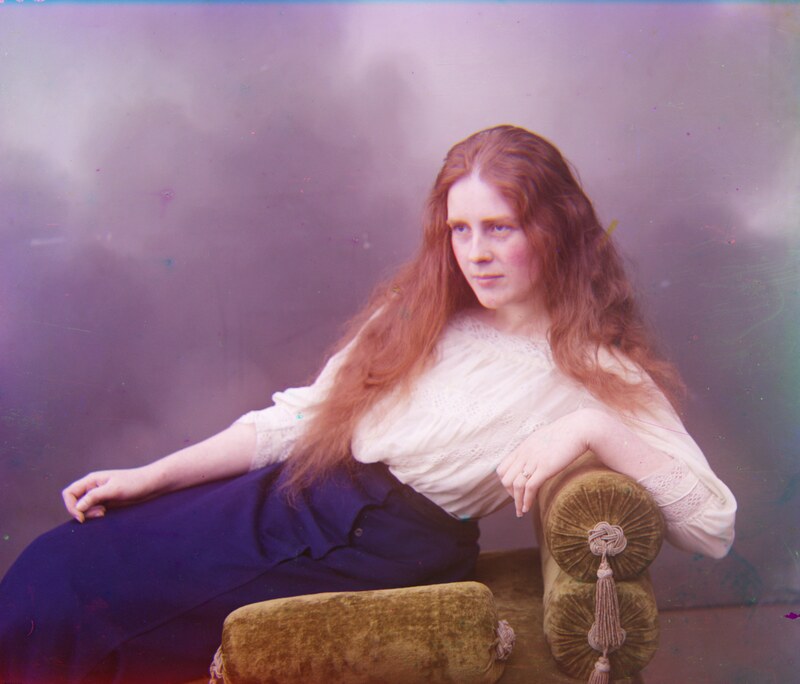
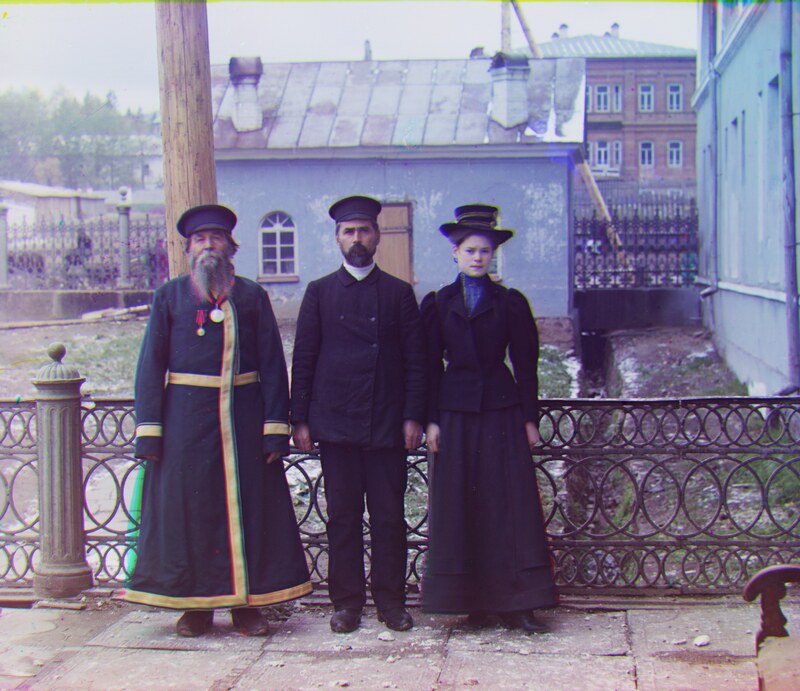
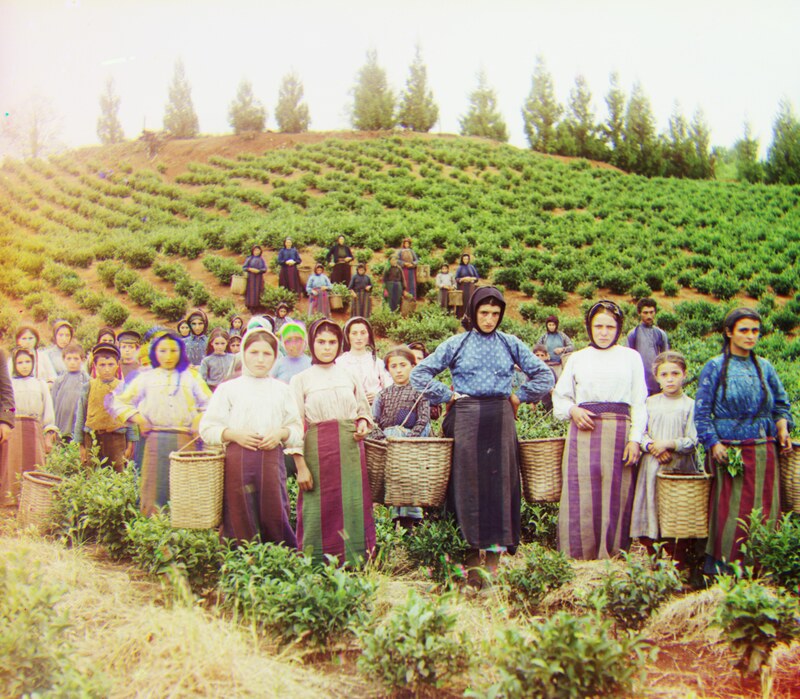
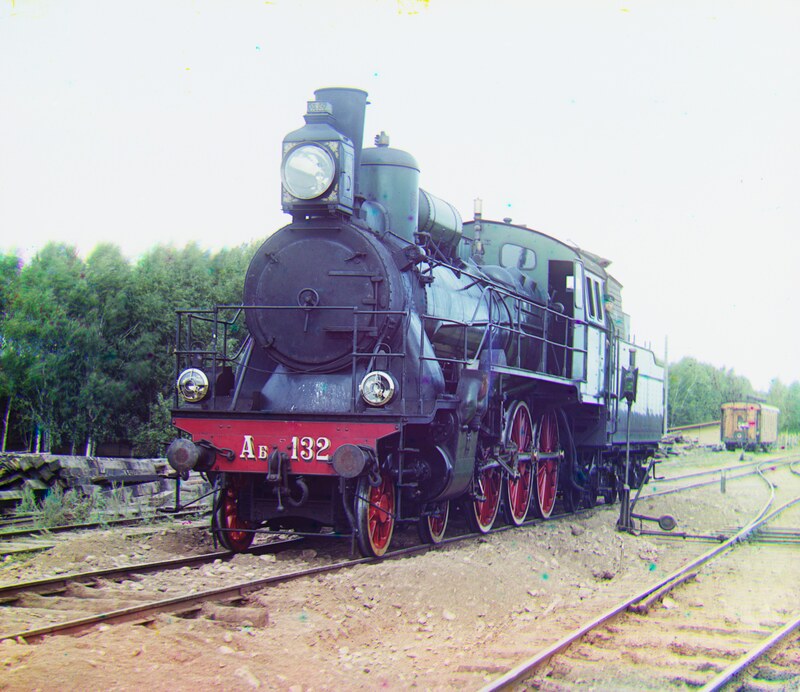
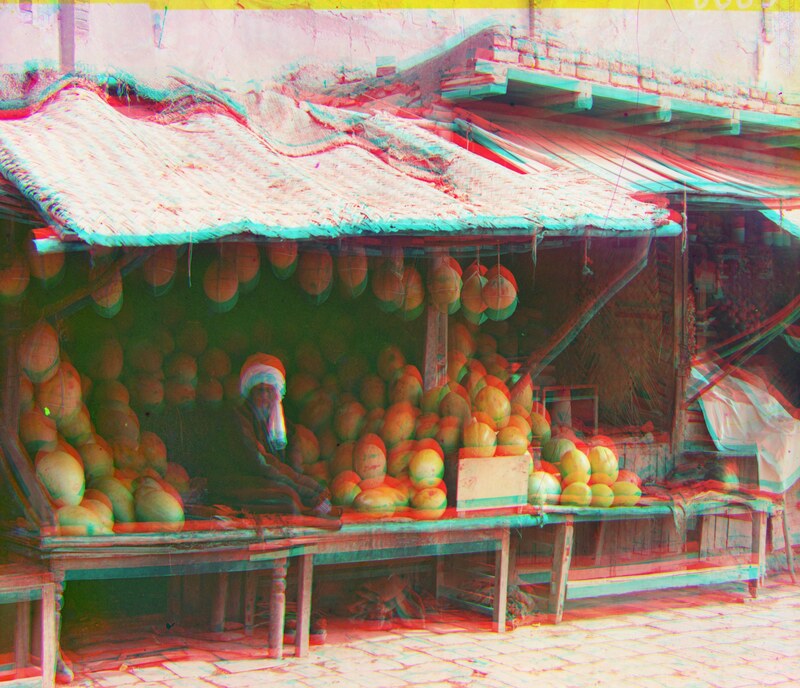
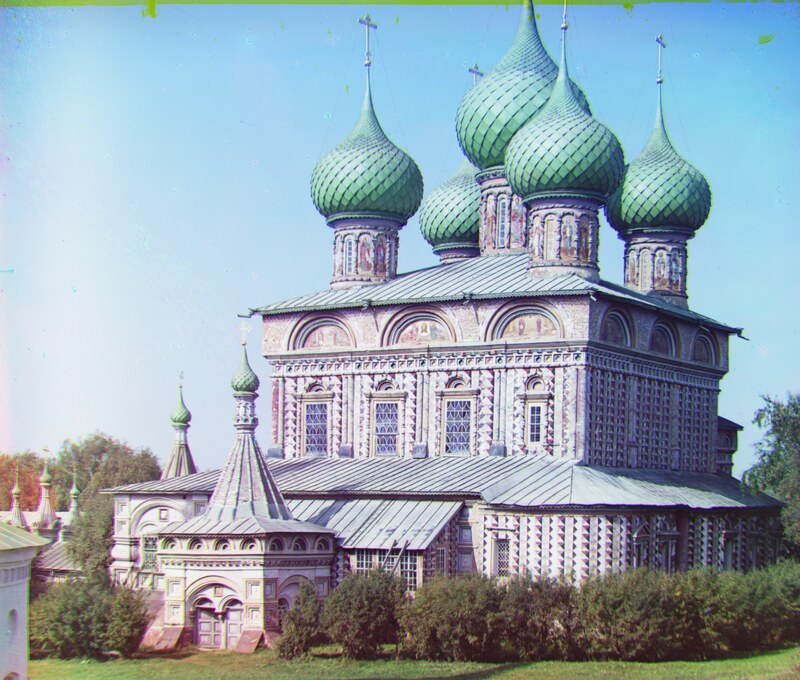
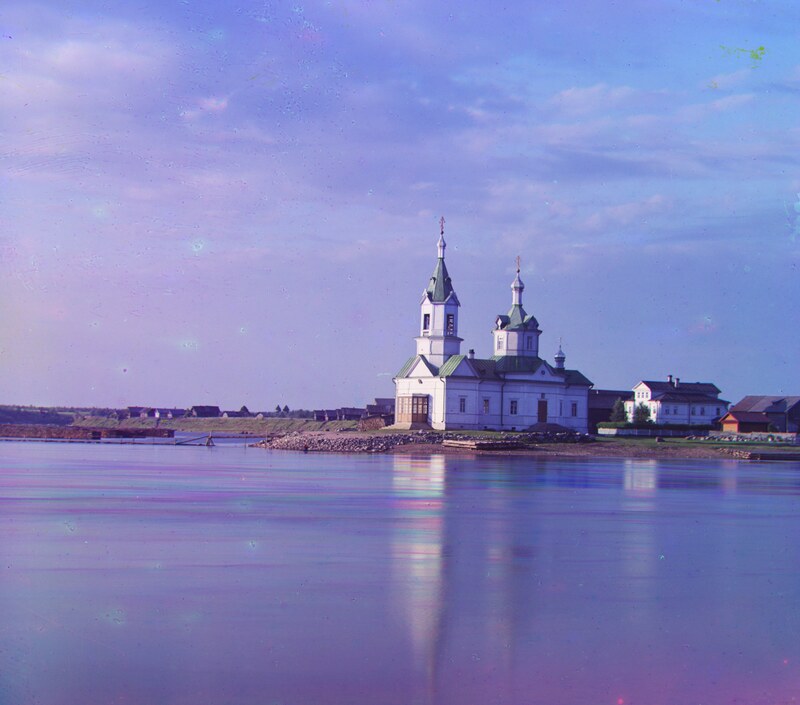
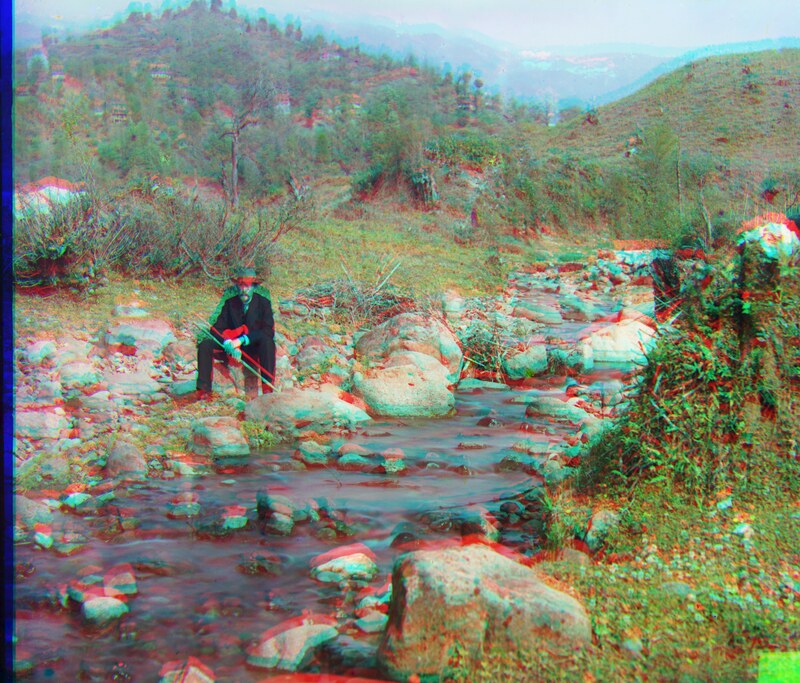
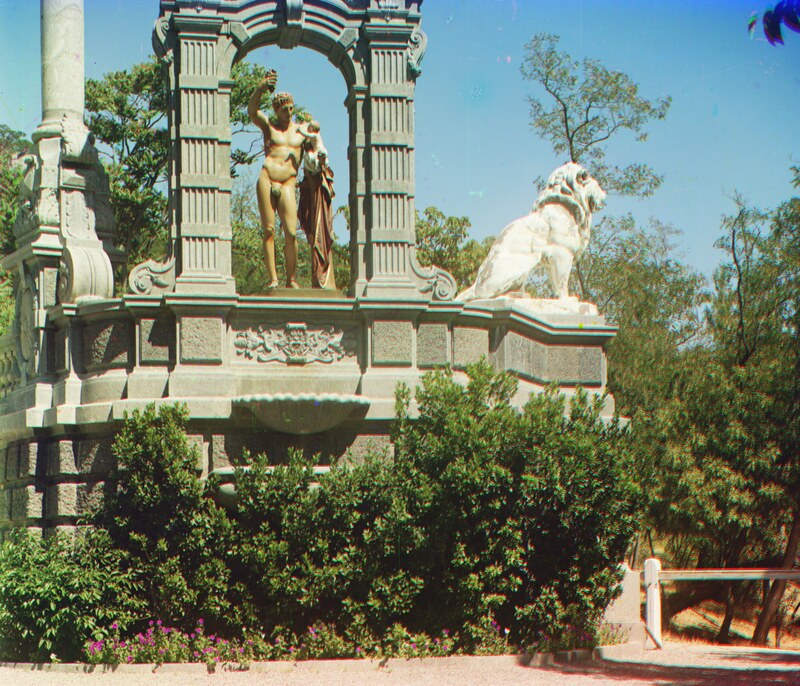
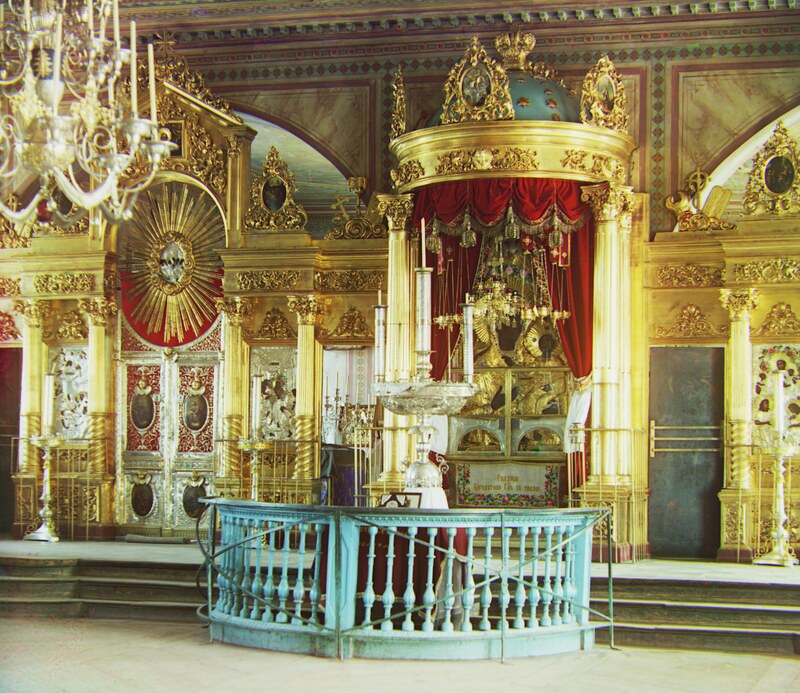
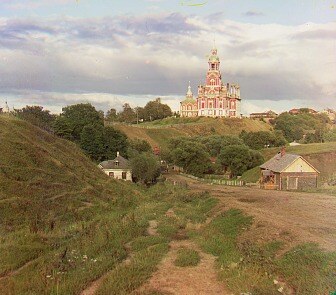
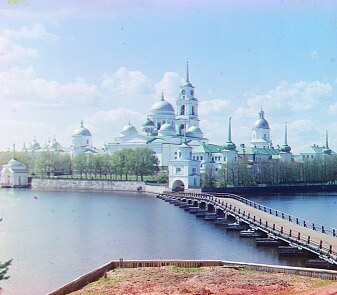
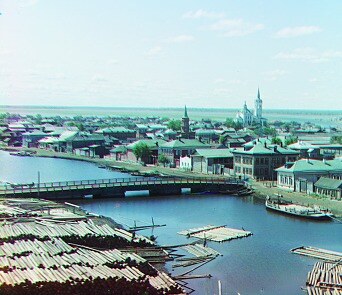
Remaining failure cases are images with large rotation between exposures (the camera tilted slightly between shots) and images where the subject moved between plates. Neither is fixable with translation-only search; rotation-aware alignment or optical flow would be needed.
Related projects
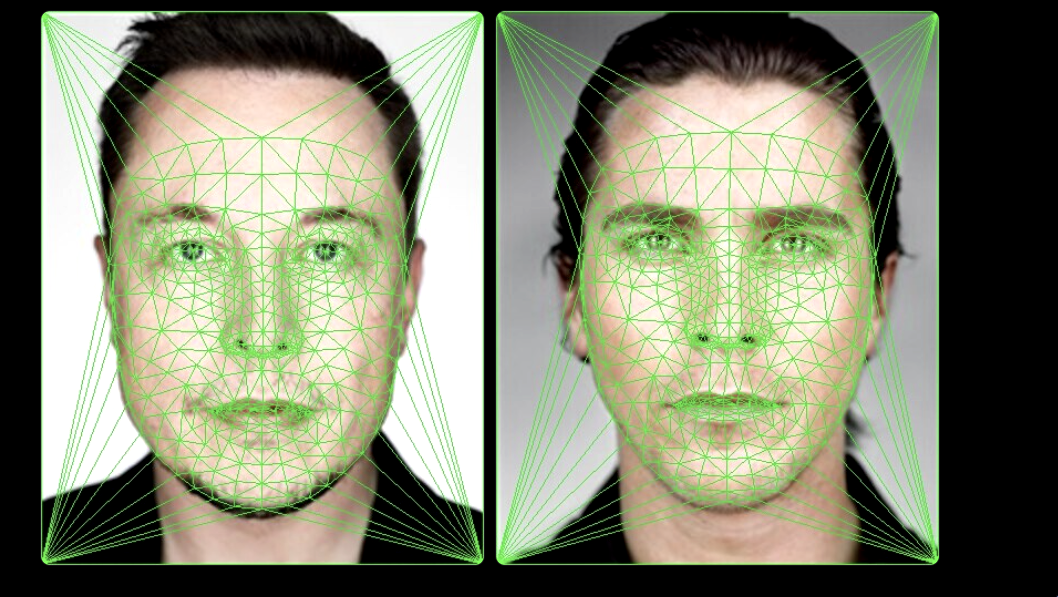
Face Morphing with Delaunay Triangulation
Smooth warping between two faces via point correspondences, Delaunay triangulation, and affine warps per triangle. Plus: population mean faces and caricature generation by extrapolation.
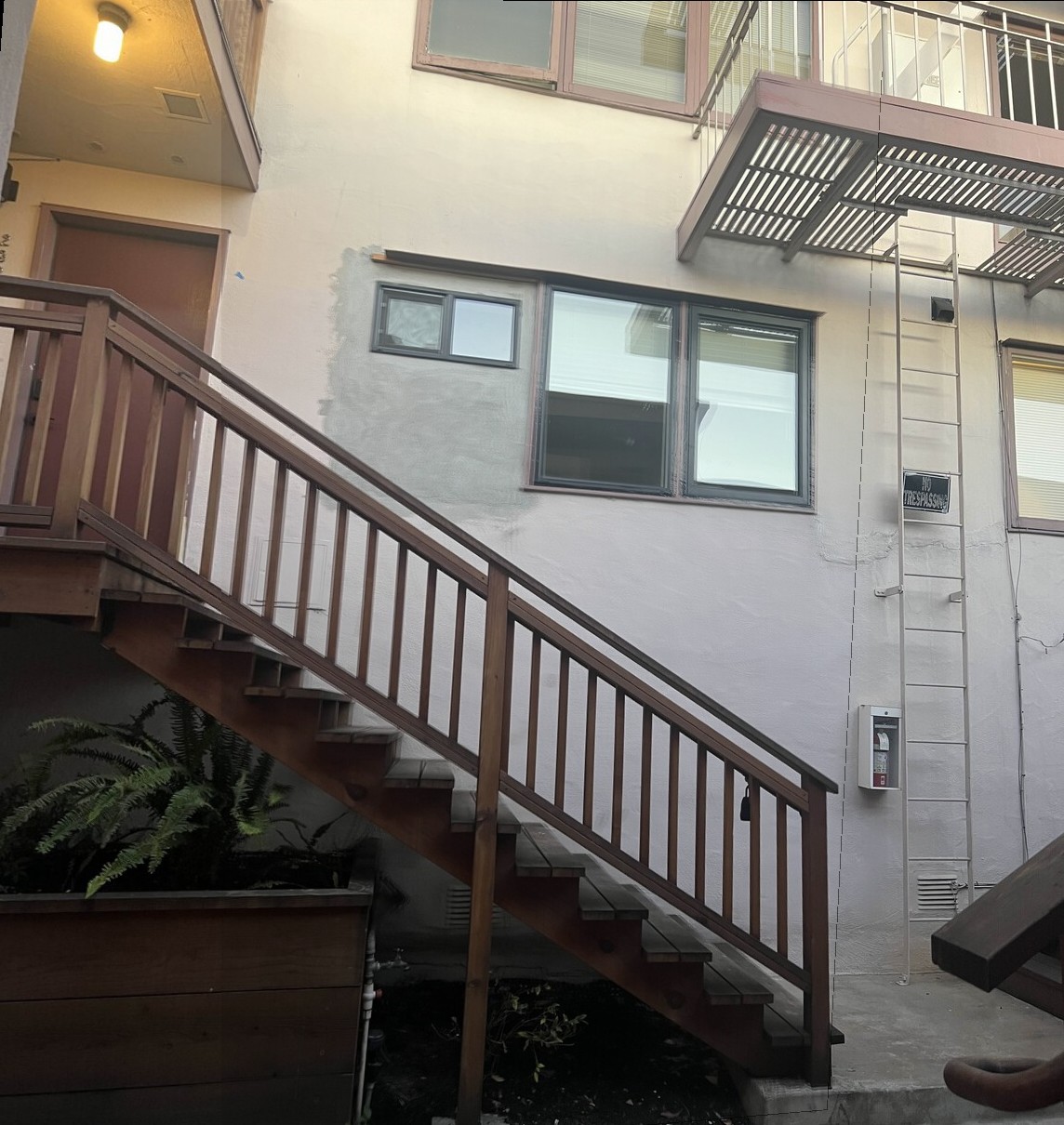
Auto-Stitching Photo Mosaics
Building a panorama pipeline from scratch: Harris corner detection, Adaptive Non-Maximal Suppression, feature matching, RANSAC for homography estimation, and Laplacian-pyramid blending.
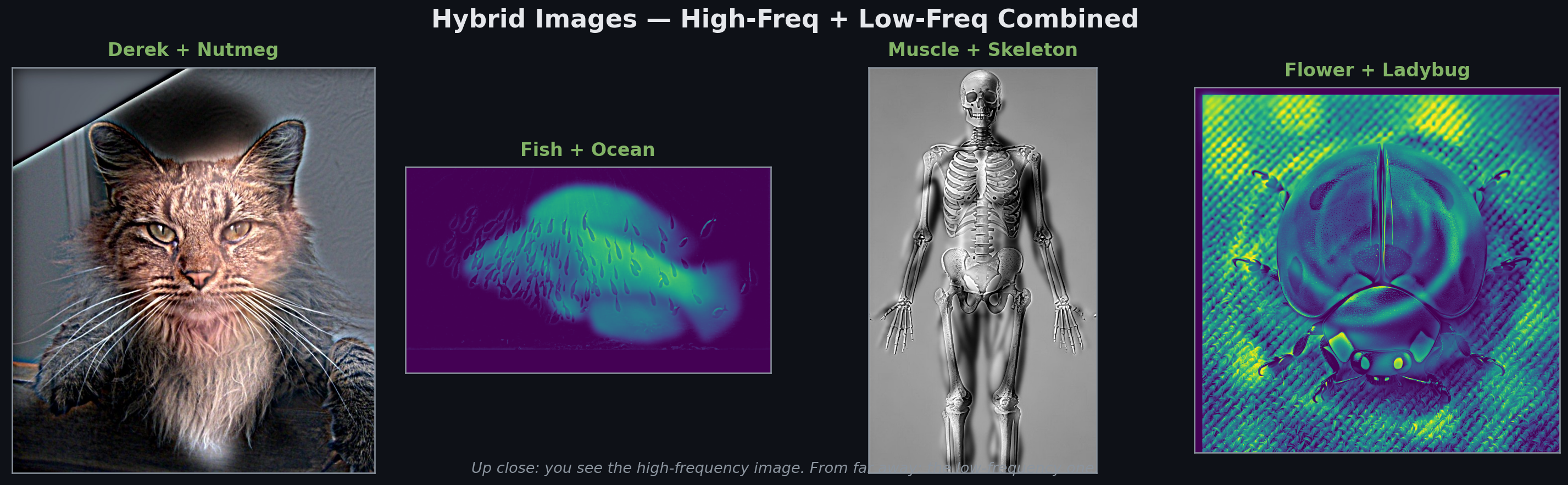
Filters & Frequencies: Edges, Hybrid Images, and Blending
Working in the frequency domain to extract edges, create hybrid images that change meaning with viewing distance, and blend images seamlessly via Laplacian pyramids. Ends with the famous 'oraple.'